5 Best AI Tools for Revenue Optimization
Maximize your game's revenue with these 5 AI tools. Compare their ability to analyze monetization strategies and suggest improvements.
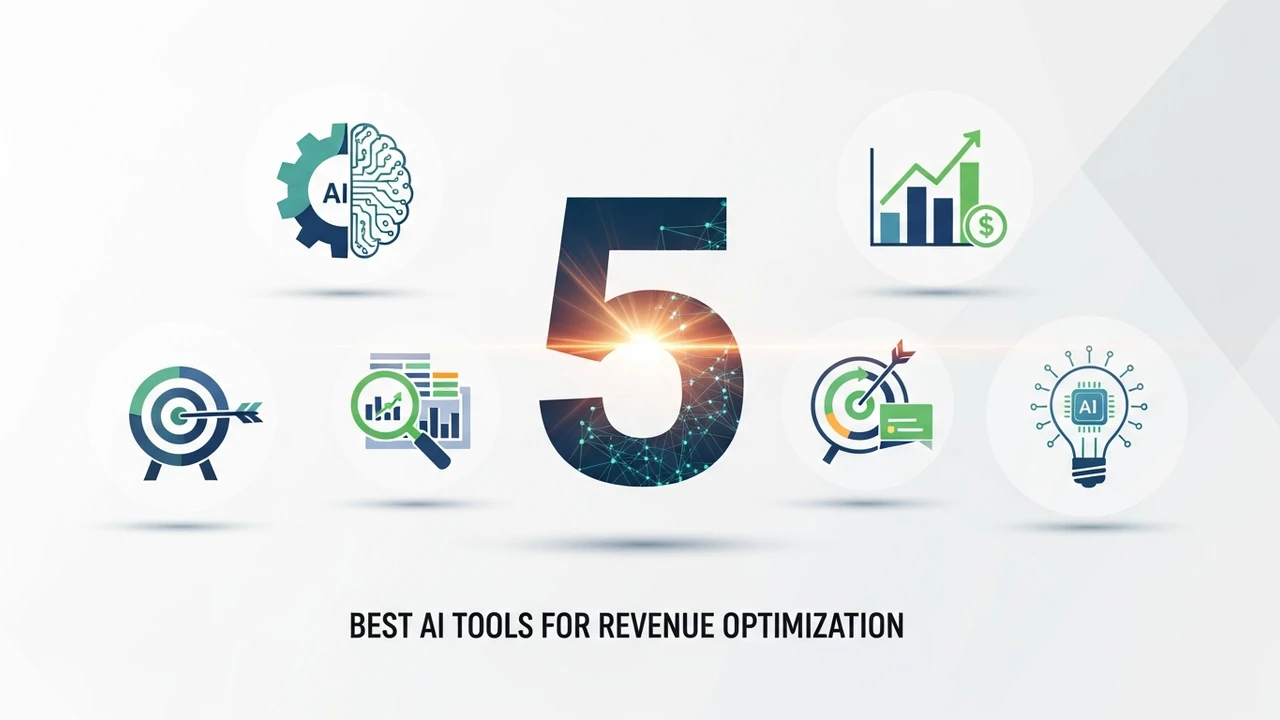
Maximize your game's revenue with these 5 AI tools. Compare their ability to analyze monetization strategies and suggest improvements.
5 Best AI Tools for Revenue Optimization
If you are running a live-service game, you know that the difference between a profitable title and a money pit often comes down to how well you optimize your monetization. It is not just about slapping a store page onto your game; it is about understanding player psychology, timing your offers, and knowing exactly when to push a microtransaction. This is where AI-driven revenue optimization tools come into play. They take the guesswork out of the equation by crunching massive datasets to tell you what your players actually want to buy.
Understanding AI Revenue Optimization for Game Developers
Revenue optimization in gaming is essentially the art of balancing player experience with monetization. You want to maximize your Average Revenue Per Daily Active User (ARPDAU) without driving your players away. AI tools help by segmenting your audience in real-time. Instead of showing the same generic offer to a whale and a free-to-play player, AI adjusts the store content dynamically. It looks at play patterns, spending history, and even session length to predict the optimal price point for every individual user.
Top 5 AI Tools for Game Revenue Optimization
Let’s dive into the heavy hitters. These platforms are currently leading the market in helping developers squeeze the most value out of their player base.
1. Unity Game Growth (formerly deltaDNA)
Unity’s suite is arguably the most integrated solution for developers already using the Unity engine. It uses predictive modeling to identify players who are likely to churn versus those who are likely to spend. Use Case: Perfect for mobile games that rely on a mix of IAP (In-App Purchases) and rewarded ads. Pricing: Starts with a free tier, but enterprise features can cost thousands per month depending on your DAU.
2. GameAnalytics
While known for general analytics, their AI-driven revenue modules are top-tier. They provide deep insights into your economy, showing you exactly where players are hoarding currency and where they are hitting paywalls. Use Case: Best for mid-core games that need to balance complex in-game economies. Pricing: Freemium model, very accessible for indie devs.
3. AppLovin MAX
This is a powerhouse for ad-revenue optimization. It uses AI to run real-time auctions for your ad inventory, ensuring you get the highest possible eCPM for every single impression. Use Case: Essential for hyper-casual games where ad revenue is the primary income stream. Pricing: Revenue share model, meaning they take a percentage of the ad revenue generated.
4. SOOMLA
SOOMLA focuses specifically on the lifecycle of the player. It tracks the 'value' of a player over time and uses AI to trigger personalized offers at the exact moment a player is most likely to convert. Use Case: Great for RPGs or strategy games with long-term progression. Pricing: Custom enterprise pricing based on scale.
5. Photon Engine (with AI extensions)
While primarily a networking engine, their integration with AI-driven backend services allows for real-time pricing adjustments in multiplayer environments. Use Case: Best for competitive multiplayer games where you need to manage a global economy. Pricing: Tiered subscription based on concurrent users.
Comparing AI Monetization Platforms and Features
When you look at these tools side-by-side, the choice usually comes down to your game's genre. If you are building a hyper-casual game, AppLovin is a no-brainer because it focuses on ad-tech. If you are building a deep RPG, you want something like Unity Game Growth or SOOMLA that understands long-term player retention and IAP behavior. The biggest difference is in the 'black box' of their algorithms. Some tools focus on 'predictive churn,' which tells you who is leaving, while others focus on 'propensity to spend,' which tells you who is ready to open their wallet. You need to decide which metric is currently hurting your bottom line the most.
Implementing AI Strategies for Better Monetization
Don't just install these tools and hope for the best. You need to feed them good data. Ensure your event tracking is clean. If your game doesn't track when a player opens a chest or finishes a level, the AI won't know when to trigger an offer. Start by running A/B tests on your store prices. Let the AI suggest three different price points for a starter pack and see which one converts better. You will be surprised at how often a slightly higher price point actually performs better because it signals 'premium' value to certain player segments. Keep iterating, keep testing, and let the data guide your store design rather than your gut feeling.
:max_bytes(150000):strip_icc()/277019-baked-pork-chops-with-cream-of-mushroom-soup-DDMFS-beauty-4x3-BG-7505-5762b731cf30447d9cbbbbbf387beafa.jpg)