5 Best AI Tools for Character Design
Design unique game characters with these 5 AI tools. Compare their ability to generate consistent character sheets and poses.
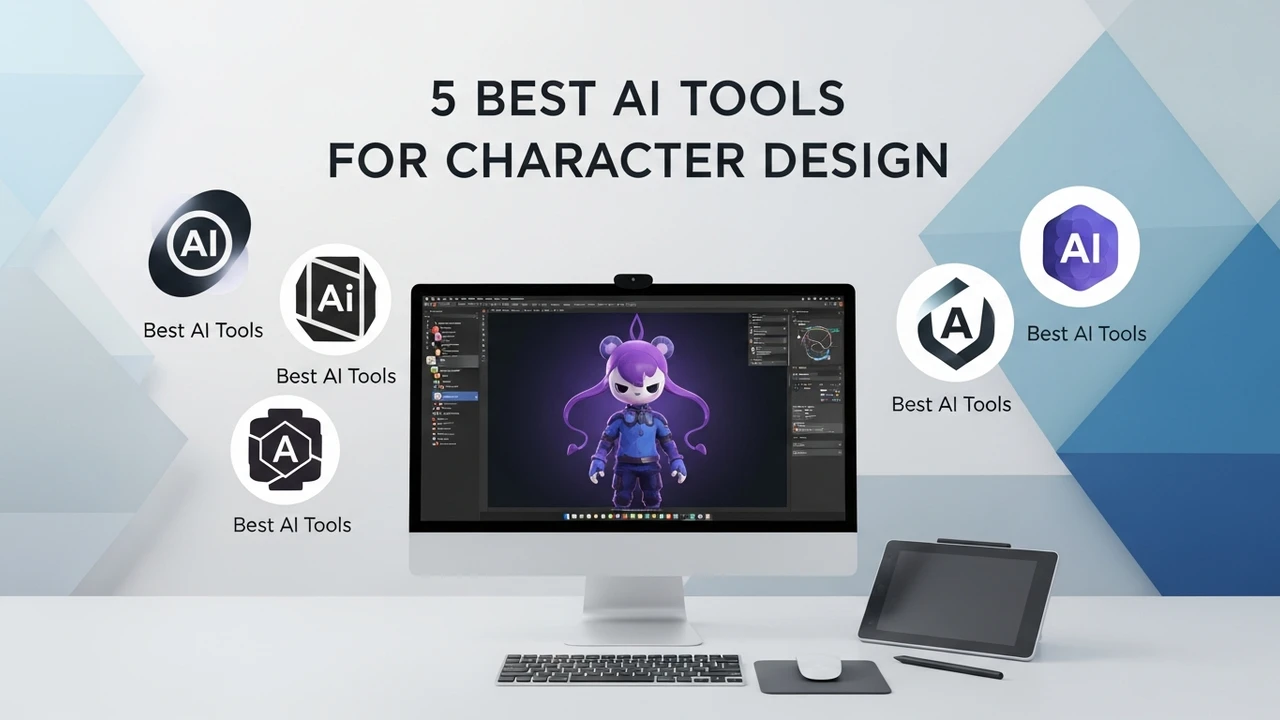
Design unique game characters with these 5 AI tools. Compare their ability to generate consistent character sheets and poses.
5 Best AI Tools for Character Design
If you have ever spent weeks trying to get a character's proportions right or struggling to keep a hero's armor consistent across different angles, you know the pain of character design. It is arguably the most time-consuming part of game development. But lately, the landscape has shifted. AI tools are no longer just toys; they are becoming essential parts of the professional pipeline. Whether you are an indie dev working solo or part of a larger studio, these tools can save you hundreds of hours.
Top AI Character Design Software and Platforms
When we talk about character design, we are looking for more than just a pretty picture. We need consistency, technical utility, and the ability to iterate quickly. Here are the top contenders currently dominating the market.
1. Midjourney: The king of artistic flair. It is incredible for concept art and finding the 'vibe' of a character. Its latest versions handle complex prompts with ease, making it perfect for brainstorming.
2. Leonardo AI: This is a game-changer for consistency. Unlike many other generators, Leonardo offers specific 'Character Reference' features that allow you to upload an image and keep the character's face and outfit consistent across multiple generations.
3. Stable Diffusion: For the tech-savvy developer, this is the gold standard. Because it runs locally, you have total control. You can use ControlNet to force the AI to follow specific poses, which is a massive advantage for animators.
4. Character Creator 4 (with AI plugins): While not a pure 'generator,' its integration with AI tools for skin texturing and facial rigging is unmatched. It is the bridge between a 2D concept and a 3D model.
5. Adobe Firefly: Integrated directly into Photoshop, this is the best tool for 'in-painting.' If you have a character design you love but the boots look wrong, you can just highlight them and ask the AI to change them without touching the rest of the character.
Comparing AI Character Design Tools for Indie Developers
Choosing the right tool depends on your workflow. If you are looking for speed, Midjourney is unbeatable. If you need technical precision for 3D modeling, Stable Diffusion with ControlNet is the way to go. Leonardo AI sits comfortably in the middle, offering a user-friendly interface that doesn't sacrifice too much control. Adobe Firefly is less about generation and more about refinement, making it a must-have for artists who already have a base sketch.
Pricing and Accessibility for Game Studios
Most of these tools operate on a subscription model. Midjourney typically starts around $10 per month for basic access. Leonardo AI offers a generous free tier, which is great for testing, with paid plans starting around $12. Stable Diffusion is technically free if you have the hardware, but you will need a powerful GPU (NVIDIA RTX 3060 or better is recommended). Adobe Firefly is included in the Creative Cloud suite, which is a bit pricier but offers the most professional ecosystem.
Practical Use Cases in Modern Game Development
Imagine you are building an RPG. You need 50 NPCs. Instead of drawing each one from scratch, you use Leonardo AI to generate a base character sheet. You then take those images into Photoshop, use Firefly to tweak the accessories, and finally, use a tool like Character Creator to turn that 2D concept into a 3D asset. This workflow cuts your production time by roughly 70%. You are not just making art; you are building a scalable pipeline.
The key is to stop thinking of AI as a replacement for your creativity and start seeing it as a super-powered assistant. It handles the grunt work—the repetitive sketching, the color variations, the pose adjustments—so you can focus on the actual game design and the story you want to tell. As these tools continue to evolve, the gap between a solo developer and a AAA studio is shrinking faster than ever before.
:max_bytes(150000):strip_icc()/277019-baked-pork-chops-with-cream-of-mushroom-soup-DDMFS-beauty-4x3-BG-7505-5762b731cf30447d9cbbbbbf387beafa.jpg)