3 Best AI Solutions for Multiplayer Game Logic
Implement smarter multiplayer systems with these 3 AI solutions. Compare their performance in handling bot behavior and matchmaking.
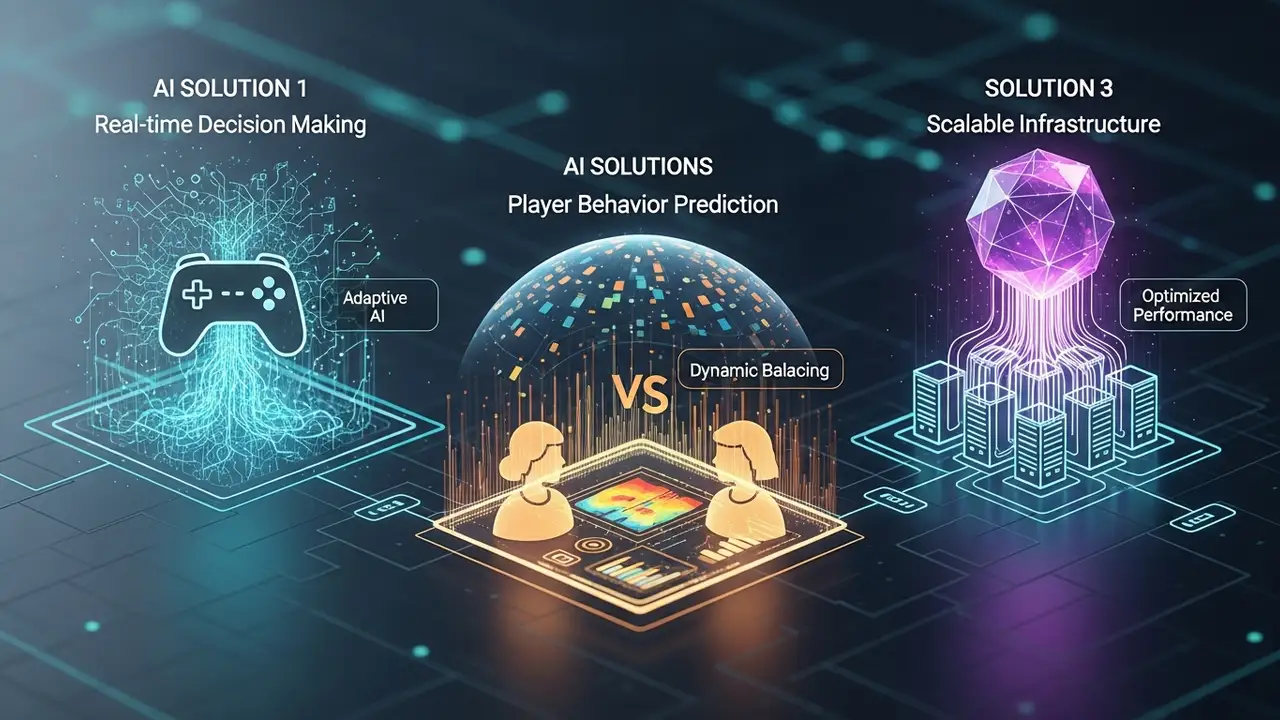
Implement smarter multiplayer systems with these 3 AI solutions. Compare their performance in handling bot behavior and matchmaking.
3 Best AI Solutions for Multiplayer Game Logic
If you have ever spent hours trying to code a decent bot for a multiplayer shooter or struggled to get your matchmaking system to actually pair players of similar skill levels, you know the pain. Multiplayer game development is hard enough without having to worry about the intelligence of your NPCs or the fairness of your lobbies. Luckily, we are living in the golden age of AI-assisted game dev. Today, we are diving into the three best AI solutions that are changing how we handle multiplayer logic, from bot behavior to dynamic matchmaking.
AI Bot Behavior and NPC Intelligence Frameworks
When we talk about multiplayer AI, the first thing that comes to mind is usually the bots. Nobody wants to play against a bot that just runs into a wall or stands still while being shot. You need bots that feel human, react to player tactics, and actually pose a threat. The current market leaders in this space are moving away from simple state machines toward more complex, learning-based systems.
First up is Inworld AI. While often used for dialogue, their character engine is surprisingly good for multiplayer bots. It allows you to give your NPCs a personality and a set of goals. Instead of just following a path, they can react to the game state in real-time. If a player is flanking, an Inworld-powered bot can actually communicate that to its teammates. It is a game-changer for tactical shooters.
Then there is Unity ML-Agents. This is the gold standard for developers who want to train their bots using reinforcement learning. You essentially let the AI play the game millions of times until it figures out the best strategy. The result? Bots that can pull off maneuvers you didn't even know were possible. It is a bit more technical to set up, but the payoff is a bot that feels genuinely competitive.
Dynamic Matchmaking and Skill Based AI Systems
Matchmaking is the heartbeat of any multiplayer game. If your matchmaking is bad, your players leave. Period. Traditional systems rely on simple ELO ratings, but modern AI solutions are taking it a step further by analyzing player behavior, playstyle, and even toxicity levels to create the perfect lobby.
GameSparks (now part of AWS Game Tech) offers some of the most robust backend services for this. Their AI-driven matchmaking allows you to define complex rulesets. You can prioritize latency, skill, or even social connections. It is not just about finding a match; it is about finding a match that keeps the player engaged for as long as possible.
Another strong contender is Modl.ai. They focus on testing and balancing, but their tools are increasingly being used to simulate player populations. By running thousands of AI-driven simulations, you can see how your matchmaking logic holds up under stress before you ever launch your game. It helps you identify if your skill-based matchmaking is actually working or if it is just frustrating your high-level players.
Comparing AI Tools for Multiplayer Development
So, how do you choose? It really comes down to your budget and your technical expertise. If you are an indie dev, Unity ML-Agents is free and incredibly powerful, but it requires a solid understanding of Python and machine learning concepts. You are looking at a time investment rather than a financial one.
On the other hand, Inworld AI and AWS Game Tech are enterprise-grade solutions. Inworld offers a tiered pricing model, often starting with a free tier for small projects and scaling up based on usage. It is great if you want to get up and running quickly without building your own AI infrastructure from scratch. AWS Game Tech is usually pay-as-you-go, which is perfect if you are scaling a massive multiplayer title and need the reliability of a cloud giant.
Real World Use Cases and Implementation Tips
Let’s look at a practical scenario. Imagine you are building a 5v5 arena brawler. You want your bots to fill in for disconnected players. Using Unity ML-Agents, you can train a model specifically for that map. The bots learn the choke points and the best times to use their ultimate abilities. Meanwhile, you use AWS Game Tech to ensure that when a player joins, they are placed in a lobby where the average skill level matches their own, keeping the match competitive but not impossible.
The key is to start small. Don't try to implement a massive AI brain for every single system at once. Start by using AI to handle your bot pathfinding, then move on to matchmaking, and finally, look into AI-driven player analytics to see how your changes are affecting player retention. It is all about iteration. You will find that as you integrate these tools, your game starts to feel more alive, and your players will definitely notice the difference in the quality of their matches.
If you are worried about the cost, remember that the time you save by not having to manually script every single bot behavior or tweak your matchmaking algorithms by hand is worth its weight in gold. Most of these platforms offer free trials or developer tiers, so there is really no excuse not to experiment. Just pick one, integrate it into a small prototype, and see how it changes the feel of your game. You might be surprised at how much more fun your multiplayer experience becomes when the AI is actually doing the heavy lifting for you.
:max_bytes(150000):strip_icc()/277019-baked-pork-chops-with-cream-of-mushroom-soup-DDMFS-beauty-4x3-BG-7505-5762b731cf30447d9cbbbbbf387beafa.jpg)