3 Best AI Tools for NPC Pathfinding
Improve NPC movement with these 3 AI pathfinding tools. Compare their performance in complex environments and dynamic obstacles.
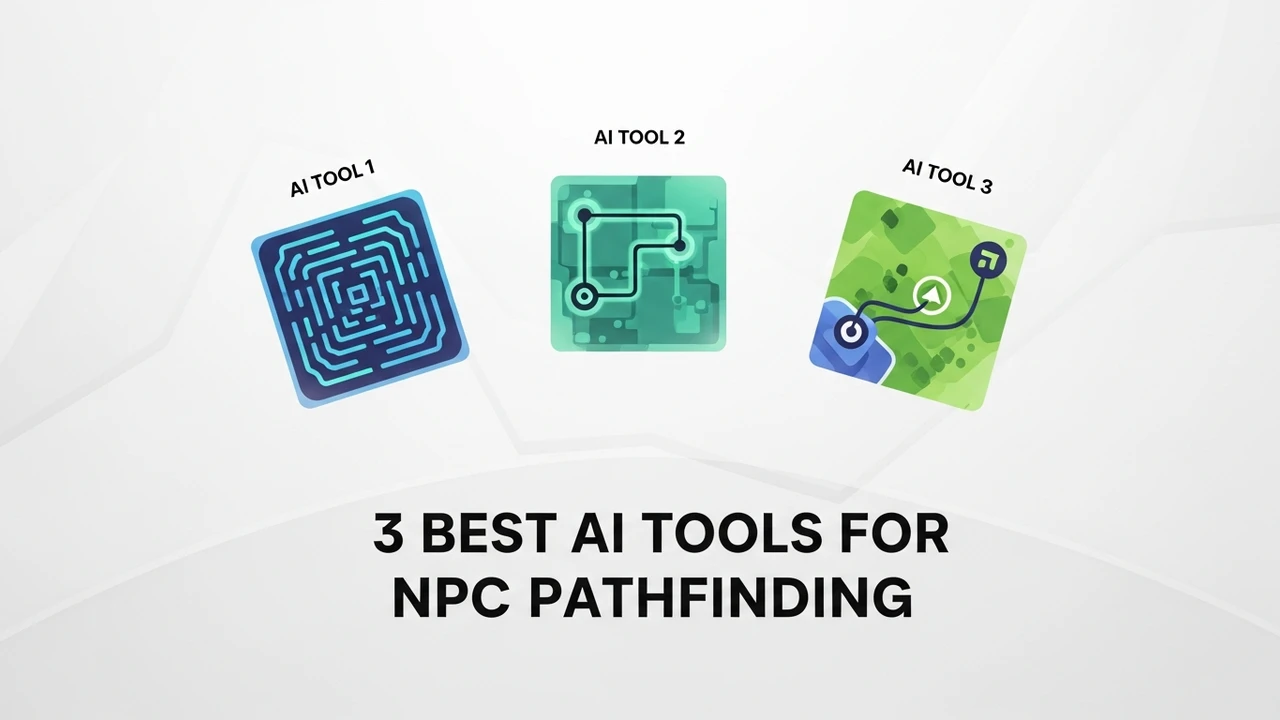
Improve NPC movement with these 3 AI pathfinding tools. Compare their performance in complex environments and dynamic obstacles.
3 Best AI Tools for NPC Pathfinding
If you have ever spent hours debugging why your game character decided to walk straight into a wall instead of around it, you know the pain of pathfinding. It is the backbone of any immersive game world. When NPCs move naturally, players feel like they are in a living, breathing environment. When they get stuck on a pebble, the immersion shatters instantly. Today, we are diving into the best AI tools for NPC pathfinding that can save you from these headaches.
Understanding the Role of AI in Modern NPC Pathfinding
Traditional pathfinding, like the classic A* algorithm, is great for static maps. But modern games are dynamic. Environments change, obstacles move, and players expect NPCs to react in real-time. This is where AI-driven pathfinding comes into play. It is not just about finding the shortest path; it is about finding the most intelligent path that considers terrain, danger, and social context. Whether you are building a sprawling open-world RPG or a tight tactical shooter, the right tool makes all the difference.
Top 3 AI Pathfinding Tools for Game Developers
Let us look at the heavy hitters in the industry. These tools are designed to handle everything from simple grid-based movement to complex 3D navigation meshes.
1. A* Pathfinding Project Pro
This is arguably the most popular choice for Unity developers. It is incredibly robust and handles everything from navmesh generation to local avoidance. It is perfect for developers who want a 'plug-and-play' solution that still offers deep customization.
Use Case: Ideal for RTS games with hundreds of units or open-world games where the terrain is constantly changing.
Pricing: Approximately $100 on the Unity Asset Store. It is a one-time purchase that pays for itself in saved development time.
2. Apex Path
Apex Path is a high-performance pathfinding solution that focuses on speed and scalability. It is built to handle massive amounts of agents without tanking your frame rate. If your game involves large-scale battles or complex crowd simulations, this is your go-to.
Use Case: Best for strategy games or simulation games where performance is the absolute priority.
Pricing: Around $60. It offers a great balance between cost and high-end performance features.
3. Recast and Detour
This is the industry standard for many AAA studios. It is an open-source library that provides a complete toolset for navmesh generation and pathfinding. While it has a steeper learning curve than the others, the level of control you get is unmatched.
Use Case: Perfect for custom engines or developers who need full control over the source code and want to integrate pathfinding deep into their game logic.
Pricing: Free (Open Source). You pay with your time and effort, but you gain total freedom.
Comparing Performance and Integration
When choosing between these, think about your team's technical skill and your game's specific needs. A* Pathfinding Project Pro is the best all-rounder. It is easy to set up and works beautifully with Unity's ecosystem. Apex Path is the speed demon; if you are seeing performance drops with hundreds of NPCs, switch to this. Recast and Detour is for the power users. If you are building a custom engine or need to modify the core pathfinding logic to suit a unique gameplay mechanic, you cannot beat it.
Handling Dynamic Obstacles and Environmental Awareness
The real magic happens when NPCs can handle dynamic obstacles. Imagine a bridge collapsing or a player placing a barricade. Your AI needs to update its path in real-time. All three tools mentioned above support dynamic navmesh updates, but they handle them differently. A* Pathfinding Project Pro uses a graph-based approach that is very intuitive for dynamic updates. Apex Path uses a more aggressive optimization strategy to ensure that even when the map changes, the NPCs do not stutter. Recast allows you to bake specific areas of the navmesh on the fly, which is great for large, complex levels.
Tips for Optimizing NPC Movement
Even with the best tools, you need to be smart. Do not run pathfinding calculations for every NPC every single frame. Use time-slicing to spread the load. Also, consider using 'steering behaviors' for local movement—let the pathfinding tool handle the high-level route, and use simple steering to handle the immediate avoidance of other NPCs. This hybrid approach is how the pros keep their games running at a smooth 60 FPS while having dozens of characters moving around the screen simultaneously.
:max_bytes(150000):strip_icc()/277019-baked-pork-chops-with-cream-of-mushroom-soup-DDMFS-beauty-4x3-BG-7505-5762b731cf30447d9cbbbbbf387beafa.jpg)