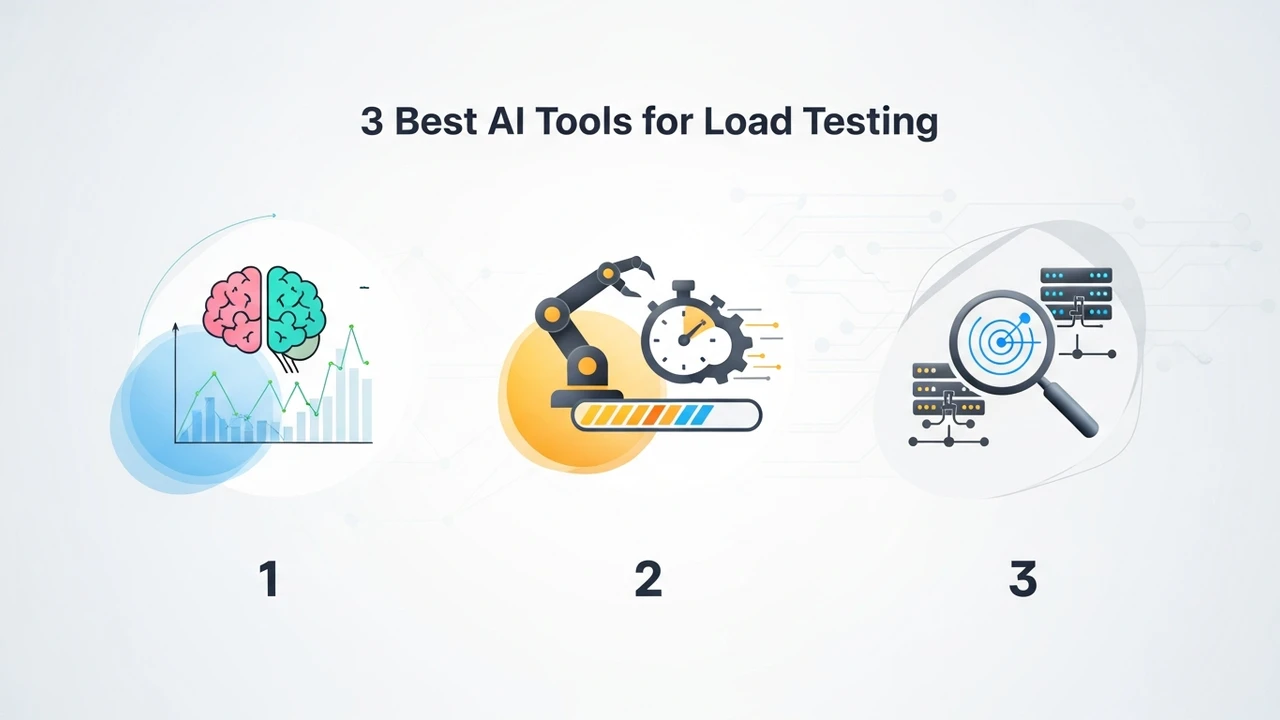
3 Best AI Tools for Load Testing
Test your game's server capacity with these 3 AI tools. Compare their ability to simulate thousands of concurrent players.
Test your game's server capacity with these 3 AI tools. Compare their ability to simulate thousands of concurrent players.
3 Best AI Tools for Load Testing in Game Development
So, you have finally built that massive multiplayer world, and you are ready to open the gates. But wait—what happens when ten thousand players try to log in at the exact same second? If your server crashes, your game is dead on arrival. That is where AI-driven load testing comes into play. Gone are the days of manually scripting every single bot movement. Today, we are looking at how AI can simulate realistic player behavior to stress-test your infrastructure before you launch.
Understanding AI Load Testing for Multiplayer Games
Traditional load testing is often static. You send a bunch of dummy requests to a server and see when it breaks. But real players are not static. They run, they jump, they chat, and they trigger complex database queries. AI load testing tools use machine learning to mimic these unpredictable patterns. By using AI, you can create 'smart' bots that actually play the game, putting a much more realistic strain on your backend services than simple ping tests ever could.
Top 3 AI Load Testing Tools for Game Servers
If you are looking to scale your game, these three tools are currently leading the pack in terms of AI integration and performance simulation.
1. Locust with AI Plugins
Locust is a classic in the industry, but when you pair it with custom AI-driven behavior scripts, it becomes a beast. It is open-source and Python-based, which makes it incredibly flexible for indie developers. You can write scripts that tell your bots to perform specific game actions, and by using AI libraries like TensorFlow, you can make those bots adapt their behavior based on server response times.
- Use Case: Perfect for indie studios that need a cost-effective, highly customizable solution.
- Pricing: Free (Open Source).
2. JMeter with AI-Powered Analytics
JMeter is the grandfather of load testing, but it has evolved. By integrating it with AI analytics platforms like BlazeMeter, you can turn your standard load tests into intelligent performance reports. It excels at simulating high-volume traffic across various protocols, making it a staple for larger studios that need to test complex API interactions.
- Use Case: Best for mid-to-large scale projects that require deep integration with existing CI/CD pipelines.
- Pricing: Free (JMeter), with paid enterprise tiers for BlazeMeter integration.
3. k6 with AI-Driven Traffic Modeling
k6 is modern, developer-friendly, and fast. Its real power lies in its ability to handle massive concurrency with very little resource overhead. When you use k6 with AI-driven traffic modeling, you can generate load patterns that mirror real-world player spikes, such as a game launch or a major content update. It is incredibly easy to script in JavaScript, which is a huge plus for web-based game developers.
- Use Case: Ideal for developers who want a modern, high-performance tool that integrates seamlessly with cloud infrastructure.
- Pricing: Free open-source version; paid cloud plans start around $50/month.
Comparing AI Load Testing Solutions
Choosing the right tool depends on your team's technical stack. If your team is heavy on Python, Locust is a no-brainer. If you need enterprise-grade reporting and have a budget, BlazeMeter/JMeter is the industry standard. For those who want a modern, fast, and developer-centric experience, k6 is hard to beat. The key difference is how they handle 'intelligence.' Locust and k6 allow you to inject your own AI logic into the bot behavior, whereas JMeter relies more on external AI analytics to interpret the data after the test is run.
Best Practices for Simulating Concurrent Players
When you are setting up these tests, do not just focus on the number of players. Focus on the 'state' of the game. A player standing still in a lobby puts very little load on the server compared to a player in a combat zone casting spells and interacting with physics objects. Use your AI tools to simulate 'hot spots' in your game world. If you know your game has a central hub where everyone gathers, make sure your AI bots are programmed to congregate there during your load tests. This will give you a much more accurate picture of how your database and server logic will hold up under pressure.
Remember, the goal is to find the breaking point before your players do. By investing time in these AI tools now, you are saving yourself from the nightmare of server outages on launch day. Keep testing, keep iterating, and keep your servers running smooth.
:max_bytes(150000):strip_icc()/277019-baked-pork-chops-with-cream-of-mushroom-soup-DDMFS-beauty-4x3-BG-7505-5762b731cf30447d9cbbbbbf387beafa.jpg)