3 Best AI Frameworks for Social Simulation
Create realistic social interactions with these 3 AI frameworks. Compare their ability to simulate NPC relationships and group dynamics.
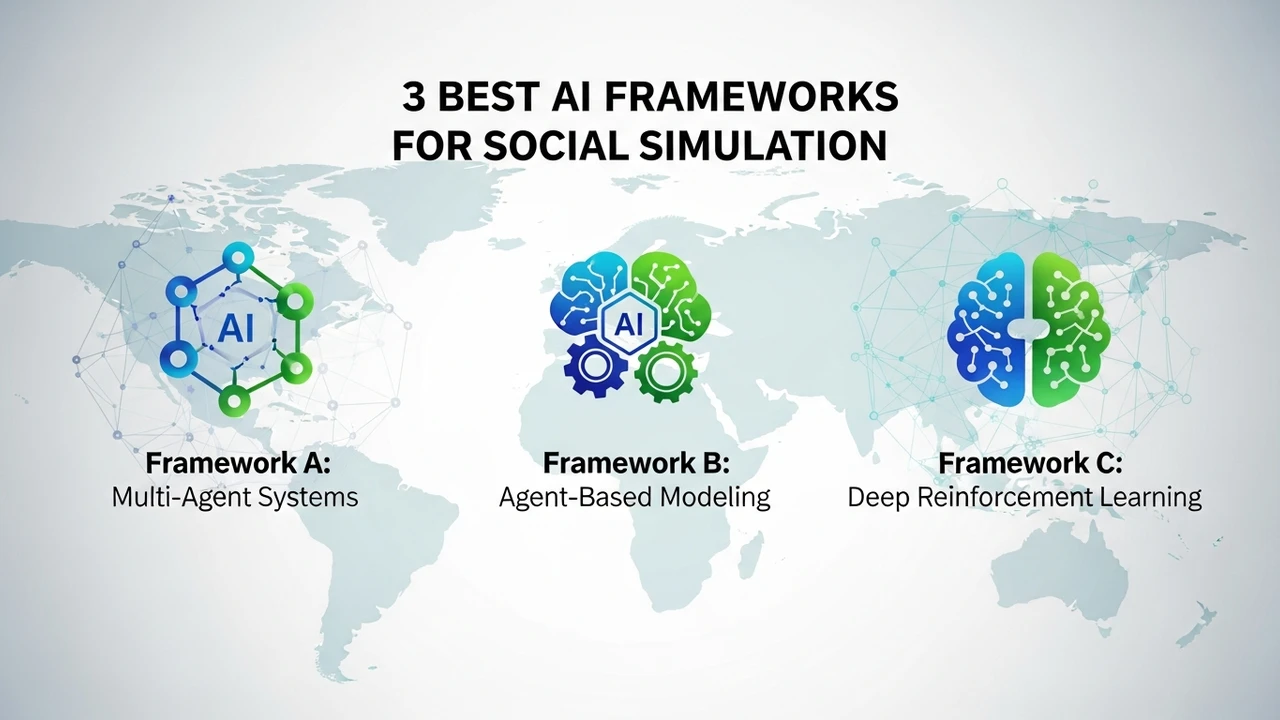
Create realistic social interactions with these 3 AI frameworks. Compare their ability to simulate NPC relationships and group dynamics.
3 Best AI Frameworks for Social Simulation
If you have ever played a game where the NPCs felt like they were actually living their own lives, you know how magical that feels. It is not just about them walking from point A to point B; it is about them having relationships, gossiping, and reacting to the world in ways that feel human. Building this kind of social depth is notoriously hard, but thanks to modern AI frameworks, it is becoming much more accessible for indie and AAA developers alike. Today, we are diving into the top three frameworks that are changing the game for social simulation.
Understanding Social Simulation and AI Frameworks
Social simulation in games is the art of creating systems where agents—your NPCs—interact with each other based on personality, history, and environmental context. Unlike traditional scripted events, these systems allow for emergent gameplay. You might have a quest where an NPC refuses to help you because you were rude to their friend three hours ago. That is the power of a robust social AI framework. These tools handle the heavy lifting of state management, memory, and decision-making, so you do not have to write a million lines of if-else statements.
Top 3 AI Frameworks for Social Simulation
When we talk about frameworks, we are looking for tools that offer a balance between ease of integration and depth of simulation. Here are the three that stand out in the current market.
1. Inworld AI for Dynamic NPC Relationships
Inworld AI is currently the gold standard for developers who want to add conversational depth to their social simulations. It is not just a chatbot; it is a character engine. You can define a character's personality, their goals, and their relationships with other NPCs. When you talk to them, they remember past interactions, which is crucial for building long-term social dynamics. It integrates beautifully with Unity and Unreal Engine, making it a top choice for developers who want to get up and running quickly.
Use Case: Perfect for RPGs where player-NPC relationships are the core of the experience. Imagine a detective game where you have to interview suspects who have their own social circles and secrets.
Pricing: They offer a generous free tier for indie developers, with scaling costs based on API usage and concurrent users. It is very friendly for those just starting out.
2. Convai for Real-Time Social Interaction
Convai focuses heavily on the real-time aspect of social simulation. It allows NPCs to perceive the world around them and react to it in real-time. If an NPC sees you stealing an item, they do not just report it; they might tell their friends, and suddenly, the whole town treats you differently. This is the kind of emergent social behavior that makes a game world feel alive. It is incredibly powerful for open-world games where the environment is constantly changing.
Use Case: Best for open-world sandbox games where NPC-to-NPC interaction is just as important as player-to-NPC interaction.
Pricing: Similar to Inworld, they operate on a usage-based model. You pay for what you use, which is great for managing costs during the development phase.
3. SmartBody for Complex Social Animation and Behavior
While Inworld and Convai focus on dialogue and logic, SmartBody is the veteran in the room when it comes to the physical manifestation of social behavior. It is an animation framework that handles how NPCs move, gesture, and look at each other during social interactions. If an NPC is angry, they do not just say they are angry; they cross their arms, avoid eye contact, and pace around. This non-verbal communication is a huge part of social simulation that many developers overlook.
Use Case: Ideal for cinematic games where the visual representation of social tension is key to the narrative.
Pricing: SmartBody is open-source, which makes it a fantastic, cost-effective option for developers who have the technical skills to integrate it into their custom engine or pipeline.
Comparing Frameworks for Your Game Development Needs
Choosing the right framework depends entirely on what you are trying to achieve. If you want deep, conversational NPCs, Inworld is your best bet. If you want a living, breathing world where NPCs react to everything, look at Convai. If you are focused on the visual and physical side of social interaction, SmartBody is the way to go. Many developers actually end up using a combination of these tools—for example, using Inworld for the dialogue logic and SmartBody for the character animation.
The cost of these tools is also a major factor. For indie developers, the usage-based models of Inworld and Convai are usually the most accessible. You do not need a massive budget to start experimenting with these systems. As your game grows, you can scale your usage accordingly. On the other hand, if you have a dedicated team of engineers, the open-source nature of SmartBody might save you money in the long run, provided you have the time to invest in the integration.
Implementing Social AI in Your Workflow
Getting started with these frameworks is easier than you might think. Most of them provide plugins for Unity and Unreal Engine, so you can drag and drop them into your project. The real work comes in the design phase. You need to think about your NPCs not just as quest-givers, but as individuals with their own motivations. What do they want? Who do they like? What are they afraid of? Once you have these answers, the AI frameworks can take over and bring those characters to life in ways you never thought possible.
Don't be afraid to start small. You don't need a complex social web for every NPC in your game. Start with a few key characters and see how they interact with the player and each other. You will be surprised at how quickly the social dynamics start to emerge and how much more engaging your game becomes as a result. It is an exciting time to be a game developer, and these tools are just the beginning of what is possible in the world of interactive AI.
:max_bytes(150000):strip_icc()/277019-baked-pork-chops-with-cream-of-mushroom-soup-DDMFS-beauty-4x3-BG-7505-5762b731cf30447d9cbbbbbf387beafa.jpg)